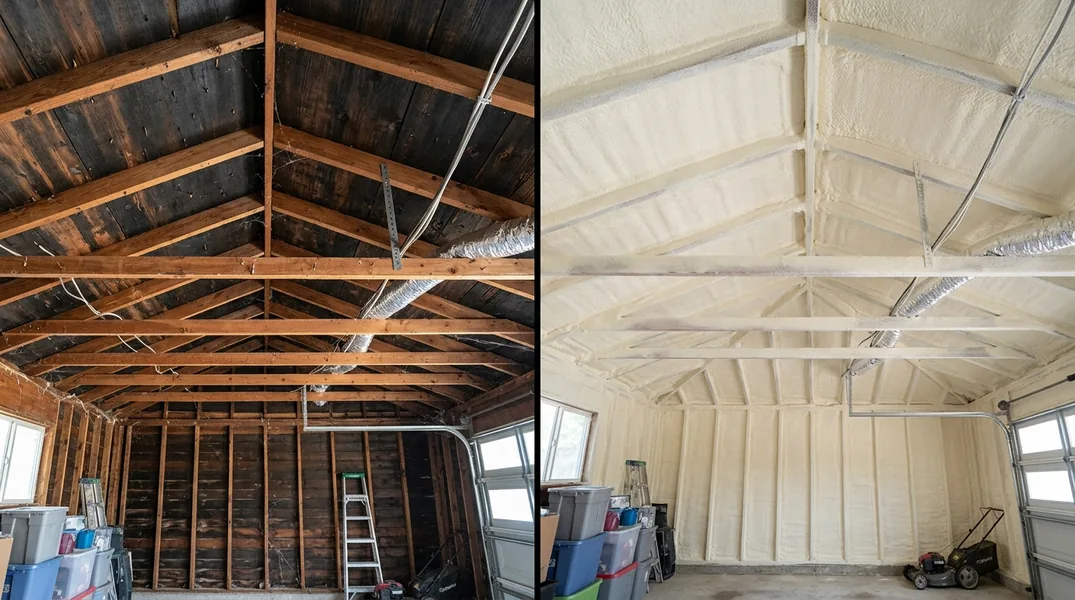
Understanding Zone 2A Humidity and Its Impact on Your Attic
San Antonio sits in IECC Climate Zone 2A, a region characterized by hot, humid summers and mild winters. This climate classification means your home faces persistent moisture challenges that most homeowners underestimate. The combination of high outdoor humidity and temperature fluctuations creates an ideal environment for moisture infiltration into attic spaces, where traditional insulation materials struggle to maintain their effectiveness.
When humidity levels rise, the air in your attic becomes saturated with water vapor. This moisture doesn't just disappear. It condenses on surfaces, seeps into insulation materials, and creates an environment where mold, mildew, and wood rot can flourish. Fiberglass batts and blown-in cellulose, the most common attic insulation types, are particularly vulnerable to moisture damage because they absorb water like a sponge. Once saturated, these materials lose their insulating properties and can actually trap moisture against your roof deck and framing lumber, accelerating structural decay.
How Moisture Degrades Traditional Attic Insulation
Traditional insulation materials rely on trapped air pockets to create an insulating barrier. Fiberglass batts, for example, contain roughly 95 percent air and only 5 percent glass fiber. When moisture penetrates these air pockets, the water conducts heat far more efficiently than air does, reducing the insulation's R-value significantly. A study of moisture-damaged insulation shows that even 5 percent moisture content can reduce R-value by up to 50 percent. In San Antonio's humid climate, this isn't a theoretical problem. It's a practical reality for thousands of homeowners.
Beyond performance loss, moisture in traditional insulation creates a cascading problem. As the insulation absorbs water, it becomes heavier and can sag away from your roof deck, creating gaps where conditioned air escapes. The moisture also migrates to framing members, where it promotes wood rot and attracts insects. Attic spaces with compromised insulation often develop musty odors and visible mold growth, which can affect indoor air quality and pose health risks to your family. This is why upgrading to Closed Cell Spray Foam Insulation has become increasingly popular among San Antonio homeowners who want lasting protection.
Why Spray Foam Outperforms Fiberglass in Humid Climates
Attic Spray Foam Insulation addresses humidity challenges in ways traditional insulation simply cannot. Closed-cell spray foam creates a continuous, impermeable barrier that resists moisture infiltration at its core. Unlike fiberglass, which allows water vapor to pass through, closed-cell foam has a vapor permeability rating of less than 1 perm, meaning virtually no moisture can diffuse through the material. This fundamental difference makes spray foam the superior choice for Zone 2A climates where humidity is a constant threat.
When spray foam is applied to your attic, it expands to fill every gap, crack, and void in your roof assembly. This complete coverage eliminates the air leakage paths that allow humid outdoor air to enter your attic space. By reducing air infiltration, you're directly reducing the amount of moisture-laden air that reaches your insulation. Additionally, spray foam's closed-cell structure prevents moisture from being absorbed into the material itself. Even in the worst-case scenario where some moisture does reach the foam, it cannot be retained or absorbed. The foam simply sheds water, protecting your roof deck and framing from rot and decay.
Crawl Space and Pier and Beam Insulation: Extending Protection Beyond the Attic
While your attic receives the most attention, humidity problems in San Antonio homes extend downward as well. Many older homes in the area feature pier and beam foundations with open crawl spaces underneath. These spaces are particularly vulnerable to moisture because they're exposed to ground humidity, standing water, and poor ventilation. Cold floors in these homes are a telltale sign that your Castle Hills or surrounding area home needs better insulation and moisture control below.
The best insulation for crawl space applications is closed-cell spray foam, the same material that protects your attic. When applied to the rim joists, band boards, and underside of your floor system, crawl space spray foam eliminates cold floors by preventing conditioned air from escaping and unconditioned outdoor air from entering. More importantly, it creates a moisture barrier that prevents ground humidity from saturating your floor insulation and structural members. Crawl space insulation with spray foam also provides superior air sealing compared to traditional fiberglass, which means your HVAC system works more efficiently and your home stays more comfortable year-round.
The Energy Efficiency Advantage in Zone 2A Climate Control
Beyond moisture protection, spray foam insulation delivers significant energy efficiency gains that matter in San Antonio's climate. Your air conditioning system works overtime during hot, humid months, and any air leakage in your attic or crawl space forces your AC to run longer and harder. Spray foam's superior air sealing reduces infiltration by up to 50 percent compared to traditional insulation, which means your cooling system reaches desired temperatures faster and maintains them with less runtime. Lower runtime translates directly to reduced energy bills and a smaller carbon footprint.
The moisture control benefits also enhance energy efficiency indirectly. When your attic or crawl space stays dry, insulation maintains its rated R-value performance. Your HVAC system doesn't have to compensate for degraded insulation performance, and your home stays more comfortable with fewer temperature swings. Over a 20-year period, the energy savings from spray foam insulation can total thousands of dollars, easily offsetting the higher upfront investment. For homeowners in Leon Valley and surrounding communities, this long-term value proposition makes spray foam the smart choice.
Getting Professional Spray Foam Insulation Near Me: Your Next Step
If you're concerned about humidity damage to your attic or crawl space, professional assessment is the first step toward a solution. San Antonio Spray Foam Insulation specializes in diagnosing moisture and insulation problems specific to your home's age, construction type, and location within Zone 2A. Our team understands the unique challenges that humidity poses to local homes and can recommend the most effective solutions, whether that's Closed Cell Spray Foam Insulation for maximum moisture protection or Open Cell Spray Foam Insulation for specific applications where vapor permeability is less critical.
Ready to protect your home from humidity-related insulation damage? Contact San Antonio Spray Foam Insulation today at (830) 429-5826 or visit our website to request a free estimate. We serve the greater San Antonio area with professional spray foam installation and can assess your attic, crawl space, or pier and beam foundation to determine the best moisture control strategy for your home. Don't wait for visible mold or sagging insulation to signal a problem. Proactive spray foam insulation installation protects your investment, improves comfort, and delivers energy savings for decades to come.
Looking for a professional spray foam insulation contractor in San Antonio? San Antonio Spray Foam Insulation responds fast for all your spray foam insulation needs.
Get a Free Quote