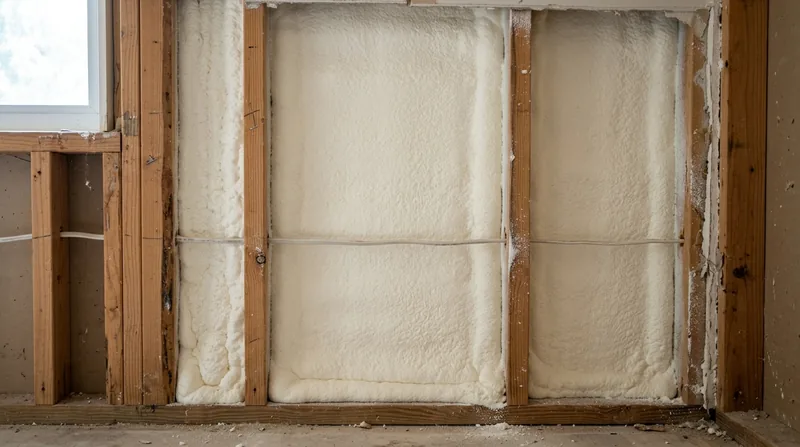




Open cell spray foam insulation in San Antonio fills wall cavities and attic framing with a soft, low-density foam that expands to seal air leaks and absorb sound. San Antonio's long cooling season and humid subtropical climate (IECC zone 2A) drive moisture inward through walls and roof decks for much of the year, making air sealing and proper attic insulation critical to keep utility bills manageable. Open cell foam works well in attics where weight is a concern and sound control matters, and it delivers R-value faster than traditional blown-in fiberglass in mid-century ranches and newer subdivisions alike. Unlike closed cell foam, open cell is softer, more forgiving in odd stud bays, and typically costs less per board foot. We've been installing spray foam insulation across Greater San Antonio since 2009, and we'll tell you plainly when open cell is the right choice and when another approach makes more sense.
Why Open Cell Spray Foam Matters in San Antonio's Hot, Humid Climate
San Antonio sits in a hot, humid climate where vented attics bake under the summer sun and pull humid outside air through the building envelope. The stack effect works against you: warm air rises, escapes through attic leaks, and cooler, humid air gets drawn in through foundation cracks, rim joists, and wall cavities. Open cell foam stops that air movement, muffles the sound of rain on metal roofs and HVAC equipment, and fills irregular framing without adding significant weight to older pier-and-beam homes in Monte Vista, King William, and Alamo Heights. It's a solid choice for attic top-ups over existing insulation, for sealing wall cavities in mid-century ranches where fiberglass has settled, and for sound dampening in homes near busy streets or under flight paths.
- Expands to fill odd stud bays and framing voids that rigid board cannot reach.
- Reduces air leakage through walls and attic floors, lowering cooling load during San Antonio's long summer.
- Absorbs sound from rain, traffic, and mechanical systems better than fiberglass or cellulose.
- Weighs less than closed cell foam, an advantage in older homes with limited roof load capacity.
- Costs less per board foot than closed cell, making it the price-friendly option for attic and wall retrofit work.
These benefits make open cell foam a practical choice when air sealing and thermal performance are the goals and weight or moisture resistance are not the limiting factors.
San Antonio example: A 1950s ranch in Leon Valley with a vented attic and settled fiberglass typically loses cool air through the attic floor and rim joist. Open cell foam applied to the underside of the roof deck and along the rim joist stops that leakage and cuts the strain on the air conditioning system without requiring roof removal or major structural work.
For more detail on how spray foam sealing works in attics, see our guide to attic spray foam insulation in San Antonio.
How We Install Open Cell Spray Foam Insulation: Process and Preparation in San Antonio
Open cell foam installation starts with a careful site walkthrough and a written estimate that lists the R-value, thickness, and board footage we expect to apply. We identify air leaks, assess the existing insulation, and confirm that the substrate (roof deck, wall framing, or attic floor) is clean, dry, and ready to receive foam. The substrate must be free of moisture, mold, or active leaks; if we find a roof leak or crawl space standing water, we stop and refer you to the appropriate specialist rather than spray over the problem. Mechanical ventilation runs during application and for the cure period to manage off-gassing, and we establish a re-entry window of twenty-four to forty-eight hours before the space is safe to occupy.
- We inspect the site, take measurements, and provide a written estimate with R-value and thickness specifications before any work begins.
- We verify that the substrate is dry and free of contamination, and we address any active moisture before foam is applied.
- We set up mechanical ventilation to manage fumes during application and cure, and we communicate the re-entry window clearly.
- We apply foam in controlled passes, maintaining proper drum temperature and mixing ratio per manufacturer specs.
- We trim and shape the foam after cure and install thermal barriers or ignition barriers as required by your local building code.
The entire process is transparent: you receive a written estimate with clear specs, and we walk you through what to expect during cure and after re-entry.
Local example: A home in Alamo Heights with an attic above a finished bedroom needed sound dampening and better insulation. We applied 5.5 inches of open cell foam to the underside of the roof deck, achieving R-21 and sealing the attic floor rim. The homeowner was able to re-enter the attic after forty-eight hours, and the ceiling below stayed quiet even during summer thunderstorms.
For details on how we handle more complex applications like wall cavities and crawl spaces, see our wall and injection foam insulation and crawl space spray foam pages.
Open Cell Spray Foam Installation Methods and Applications
| Application | Description | Best For |
|---|---|---|
| Sealed Attic Roof Deck | Foam sprayed directly to the underside of roof decking, creating an unvented, conditioned attic that eliminates the stack effect and heat gain from the outside. | Attics in vented condition with poor insulation; homes in Monte Vista, King William, and similar older neighborhoods where roof load is a concern. |
| Attic Floor Over Existing Insulation | Thin layer of open cell foam applied over settled fiberglass or cellulose to seal air leaks and add R-value without full tear-out. | Top-ups on sound attics where existing insulation is in place but insufficient for the climate zone; cost-effective retrofit across San Antonio. |
| Wall Cavity Fill | Open cell foam injected or sprayed into wall cavities of mid-century ranches and older homes, filling voids left by settled or thin fiberglass. | Retrofit insulation in walls without demolition; homes in Leon Valley, Terrell Hills, and similar mid-century neighborhoods. |
| Rim and Band Joist Sealing | Open cell foam applied around the rim joist and band board where the house frame meets the foundation, blocking air and moisture infiltration. | Pier-and-beam homes in Monte Vista and older inner-city neighborhoods; essential for reducing stack effect and ground moisture. |
| Garage Ceiling | Open cell foam sprayed to garage ceiling underside to provide thermal break between unconditioned garage and living space above. | Attached garages across San Antonio where summer heat gain from the garage drives cooling load; sound dampening bonus for homes near traffic. |
Each application method is chosen based on the substrate condition, the existing insulation, local code requirements, and your budget. We assess your specific situation and recommend the approach that delivers the best performance for the cost.
Open Cell Spray Foam Insulation Cost in San Antonio: What to Expect
Open cell spray foam insulation in San Antonio typically starts at around $0.55 per board foot, though the final price depends on several factors specific to your home and the scope of work. The board footage is measured on site after the foam is applied and cured, so an estimate gives you a range based on the square footage, desired R-value, and thickness. A typical attic top-up on a 1,500-square-foot home might run 800 to 1,200 board feet, putting the material cost in the $440 to $660 range before labor, equipment, and permits. Wall cavity fill and rim joist sealing tend to be smaller jobs with lower total cost but similar per-board-foot pricing.
Several factors move the price up or down:
- Existing insulation must sometimes be removed before foam is applied, adding labor and disposal cost.
- Attic access, framing complexity, and the need for thermal or ignition barriers can affect the speed and material cost of installation.
- Homes in areas requiring building permits may need an inspection, which adds time but ensures code compliance.
- The size and layout of the space determine how much foam is needed and how efficiently the crew can work.
We provide a free written estimate that breaks down the board footage, R-value, and total cost before any work begins. We recommend getting 2 to 3 estimates from different contractors so you can compare specs, not just price. Beware of quotes with no R-value or thickness listed, or estimates far below market rate with no clear scope; those are red flags for rushed work and poor oversight.
For a detailed pricing breakdown and examples of typical jobs, visit our pricing page.
What to Look for When Hiring an Open Cell Spray Foam Contractor Near San Antonio
Choosing the right spray foam contractor is critical because poor installation can lead to off-gassing, inadequate air sealing, and thermal barriers installed incorrectly or not at all. Start by asking any contractor whether they are fully insured and able to provide a certificate of insurance on request. Confirm that they can provide a written estimate with R-value and thickness specifications, not a vague price per square foot. Ask about their process for managing fumes during cure, their re-entry window, and whether they pull permits where required at your address. Check references from recent jobs in San Antonio, and ask those homeowners specifically about the quality of the estimate, the professionalism during installation, and whether any issues came up after the job was done.
- Request a written estimate that lists R-value, thickness, board footage, and total cost before agreeing to any work.
- Verify that the contractor is fully insured and able to provide proof of coverage that includes liability and workers compensation.
- Ask about the specific re-entry window, mechanical ventilation setup, and any restrictions on attic access or occupancy during cure.
- Confirm whether permits are required at your address and whether the contractor will help you navigate the process with your local building department.
- Check at least two references from recent jobs in your neighborhood and ask about the estimate accuracy, installation cleanliness, and post-job support.
- Ask the contractor how they verify substrate moisture and what they do if they find wet or contaminated material; a good answer is that they address it or refer you to another trade.
The contractor who is willing to walk you through the details, provide references, and answer your questions clearly is the one most likely to deliver professional work that lasts.
To schedule a free estimate and talk through your specific situation, contact us or call (830) 429-5826.
Open Cell Spray Foam Insulation in San Antonio: Pricing Guide
| Service | Price | Details |
|---|---|---|
| Open Cell Attic Top-Up | Starting at $0.55/board ft | Thin layer over existing insulation to seal air leaks and add R-value; typical 1,500 sq ft home runs 800 to 1,200 board feet |
| Open Cell Wall Cavity Fill | Starting at $0.55/board ft | Retrofit insulation in mid-century ranches and older homes; job size and access determine total cost and labor hours |
| Rim Joist and Band Joist Sealing | Starting at $0.55/board ft | Smaller scope than attic work but critical for pier-and-beam homes; typically 200 to 400 board feet depending on foundation length |
| Insulation Removal and Replacement | On estimate | Scope and cost depend on material type, square footage, and whether disposal requires special handling; site inspection required |
| Travel and Estimate | Included and Free | No mileage fee or travel charge within San Antonio and surrounding service areas; free written estimate within 24 hours of contact |
Indicative pricing, the exact cost depends on square footage, finish, and site access. Free personalized estimate within 24h at (830) 429-5826.


