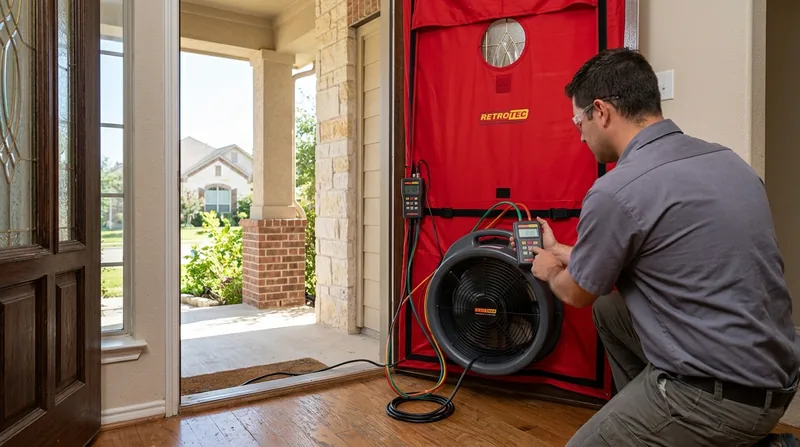




Air sealing in San Antonio stops the stack effect that pulls humid outdoor air through gaps in your home's envelope, driving cooling costs up all summer long. San Antonio's older housing stock, pier-and-beam bungalows in Monte Vista and King William, mid-century ranches across Leon Valley, and sprawling subdivisions pushing north toward Helotes, sits in climate zone 2A, hot and humid, where moisture works inward through walls and roof decks for much of the year. Most homes have vented attics that bake under the long Central Texas sun while pulling in humid air that works against your HVAC system below. Ductwork running exposed through attic floors compounds the problem. We seal the penetrations, top plates, rim joists, and attic bypasses where air leaks out or humid air leaks in, so conditioned air stays where it belongs and your system doesn't fight the outdoor environment.
Why Air Sealing Matters in San Antonio's Hot, Humid Climate
The stack effect is the invisible force that drives energy waste in older San Antonio homes. Warm air rises and escapes through attic bypasses, ceiling penetrations, and gaps around ductwork and electrical chases. That pressure difference pulls humid outside air in through lower-level gaps, rim joists, crawl space rim boards, and wall cavities. In a climate where cooling runs nine months a year, every gap that lets conditioned air escape or humid air enter costs you money. Air sealing is the foundation of energy efficiency because it stops the leak before any insulation can work properly.
- Seals attic bypasses around ductwork, wiring, and plumbing so conditioned air doesn't escape into unconditioned space.
- Closes rim joist and band joist gaps where the house frame meets the foundation, a major leak point in pier-and-beam construction common in older San Antonio neighborhoods.
- Stops air movement through wall cavities and penetrations, reducing the load on your HVAC system during peak cooling hours.
- Prevents humid air from infiltrating crawl spaces and wall assemblies, which is the dominant failure mode in San Antonio's hot-humid climate.
- Works in tandem with blown-in or spray foam insulation to make either product perform as designed.
Without air sealing, insulation alone cannot stop the stack effect. We start with a thorough inspection to identify where air is moving, then seal those paths with spray foam, caulk, or mechanical closure before adding or upgrading insulation.
Key info: A Monte Vista bungalow with gaps around the attic access hatch, unsealed rim joists, and exposed ductwork in the attic can lose 25 to 40 percent of conditioned air before it reaches the living space. Air sealing those three zones alone typically cuts cooling costs by 10 to 20 percent, depending on how leaky the rest of the envelope is. See our attic spray foam insulation page for how sealing and insulation work together.
For more on how your local building department addresses attic ventilation and thermal barriers, contact the City of San Antonio Development Services or your city's building inspector before work begins. Texas regulates contractors at the municipal level, and registration requirements vary by jurisdiction.
How We Perform Air Sealing in San Antonio Homes
Air sealing is detective work followed by systematic closure. We start by walking the attic, crawl space, and rim joist line to find where air is moving. Then we seal in order: first the biggest leaks (attic bypasses, rim joists, ductwork penetrations), then secondary gaps (wiring holes, plumbing vents, electrical outlets on exterior walls). Our crews use spray foam for gaps larger than a quarter-inch, caulk or foam sealant for smaller cracks, and mechanical fasteners or plates for large openings that need structural closure. The goal is to create a continuous air barrier without trapping moisture or creating a health hazard.
- We inspect your attic, crawl space, rim joist, and wall cavities to map where air leaks are occurring.
- We seal attic bypasses around ductwork, wiring chases, and plumbing penetrations with low-pressure spray foam or caulk.
- We close rim joist and band joist gaps, a critical step in pier-and-beam homes common in Leon Valley and Alamo Heights.
- We verify that mechanical ventilation and re-entry windows are respected during any spray foam application.
- We document the work with photos and notes so you know exactly what was sealed and why.
The result is a tighter envelope that lets your HVAC system work efficiently without fighting the stack effect. For larger projects that combine air sealing with insulation upgrades, see our closed cell spray foam page for moisture control in humid climates.
Example: A Terrell Hills ranch with a vented attic, exposed ductwork, and gaps around the attic access hatch. We seal the bypass around the ductwork, caulk the hatch frame, and close rim joist gaps at the foundation line. The homeowner reports cooler upstairs bedrooms and a noticeable drop in summer cooling bills within the first month.
Air Sealing Methods and Approaches
| Approach | Description | Best For |
|---|---|---|
| Spray Foam Sealing | Low-pressure spray foam applied to gaps larger than a quarter-inch, expands to fill voids and hardens into a rigid seal. | Attic bypasses, rim joists, ductwork penetrations, and wall cavities in retrofit work. |
| Caulk and Sealant | Paintable or non-paintable caulk for small cracks, seams, and penetrations that do not need structural fill. | Wiring holes, small plumbing vents, electrical outlet boxes, and trim gaps in attics and crawl spaces. |
| Mechanical Closure | Rigid plates, blocking, or covers fastened in place to seal large openings like attic access hatches or crawl space vents. | Attic hatches, crawl space rim vents, and large penetrations where foam or caulk alone is insufficient. |
| Ductwork Sealing | Mastic or foil tape applied to seams and connections in exposed ductwork to stop air leakage at the source. | Attics and crawl spaces where HVAC ducts run exposed; complements air sealing of attic bypasses. |
Air Sealing Cost in San Antonio: What to Expect
Air sealing costs depend on how many gaps need closure, how large they are, and how accessible they are. A simple attic bypass sealing project in a single-story San Antonio home might run $650 to $1,200. A comprehensive air sealing job that includes rim joists, crawl spaces, and multiple attic penetrations typically ranges from $1,500 to $3,500. Homes with complex layouts, multiple stories, or hard-to-reach areas cost more because the work takes longer and requires more material and labor.
The biggest factors that move the price are the number of gaps, their size, and whether you're sealing an attic alone or combining attic, rim joist, and crawl space work. Homes with exposed ductwork in the attic, multiple plumbing vents, and large bypass areas around HVAC equipment tend to be on the higher end. Homes with fewer penetrations and straightforward layouts cost less. We always provide a written estimate with the scope, materials, and labor spelled out so you know what you're paying for.
We recommend getting 2 to 3 estimates before deciding. Be wary of quotes that don't specify what's being sealed, how much area or how many gaps, or what material will be used. A good estimate tells you exactly what will be sealed and why, so you can compare apples to apples. For a full pricing overview and to request your free estimate, visit our pricing page or call us at (830) 429-5826.
Air Sealing Near Me: What to Look for When Hiring a Contractor in San Antonio
Not all air sealing is done correctly. A bad installer will spray foam over wet substrates, promise re-entry before twenty-four hours, or skip mechanical ventilation during cure. The result is odor that lingers for weeks, foam that doesn't adhere properly, and a homeowner with no recourse. Here is what to verify before you hire any spray foam contractor, including us.
- Ask whether the contractor is fully insured and request a certificate of insurance showing general liability and workers compensation coverage.
- Confirm that your city or county requires contractor registration before work begins, and ask the contractor to show their registration or explain why it is not required at your address.
- Get a written estimate that specifies what will be sealed, how much material will be used, and what the labor and total cost are.
- Ask whether they will provide mechanical ventilation during foam application and what the re-entry window is (typically twenty-four to forty-eight hours).
- Check references from recent jobs in your neighborhood, Monte Vista, King William, Leon Valley, or wherever your home is located.
- Confirm that any work touching your roof, attic vents, or exterior will comply with your HOA architectural rules if you live in a master-planned community.
We are fully insured, provide written estimates with R-value and thickness specifications, and follow manufacturer protocols for spray foam application. If you have questions about our insurance or process, call us at (830) 429-5826 or request a free estimate.
Air Sealing in San Antonio: Pricing Guide
| Service | Price | Details |
|---|---|---|
| Basic attic air sealing | Starting at $650 | Sealing attic bypasses around ductwork and plumbing, small penetrations, and hatch frame; single-story homes with straightforward layouts |
| Comprehensive air sealing | Starting at $1,500 | Attic bypasses, rim joists, crawl space rim board, and multiple penetrations; larger homes or multi-story structures with complex layouts |
| Rim joist and band joist sealing | Starting at $800 | Pier-and-beam foundation perimeter, common in older San Antonio neighborhoods; price varies by linear feet and accessibility |
| Crawl space air sealing | Starting at $1,200 | Rim board, rim vents, and penetrations; does not include encapsulation or dehumidification, which are separate services |
| Complex or multi-zone project | On estimate | Combination of attic, rim joist, crawl space, and wall sealing; requires site inspection to determine scope and material needs |
| Free estimate and travel | No charge | Response within twenty-four hours for San Antonio and surrounding areas; no obligation to book, includes written quote with specifications |
Indicative pricing, the exact cost depends on square footage, finish, and site access. Free personalized estimate within 24h at (830) 429-5826.


