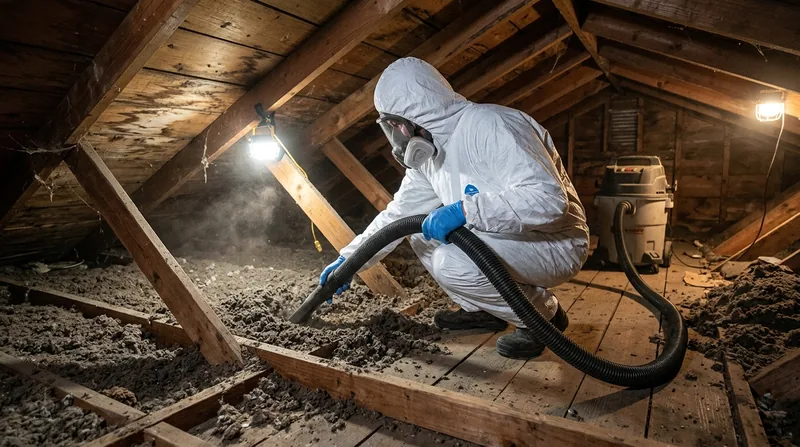




San Antonio's housing stock spans pier-and-beam bungalows in Monte Vista and King William, mid-century ranches across Leon Valley and inner neighborhoods, and sprawling subdivisions pushing north toward Stone Oak and Helotes. Most homes sit on slab-on-grade foundations, but older construction often carries attics with vented, exposed ductwork and crawl spaces beneath pier-and-beam floors. Insulation removal in San Antonio becomes necessary when old fiberglass, blown-in cellulose, or failed spray foam settles, absorbs moisture from Central Texas humidity, or shows signs of pest contamination. We remove the old material safely and completely, clearing the way for new spray foam or fiberglass that will actually perform in our hot, humid climate. Over 15 years serving San Antonio and surrounding Bexar County, we handle attic tearouts, crawl space clearance, and wall cavity removal before every retrofit we install.
Why Insulation Removal Matters in San Antonio's Climate
The long cooling season and stack effect that dominates San Antonio energy bills often start with insulation that no longer works. Settled fiberglass loses its R-value, moisture-soaked batts and blown-in material compress and trap humidity, and old spray foam can crack or shrink, leaving gaps that pull in outside air and ground moisture. Removing failed insulation is not cosmetic work; it is the foundation of any retrofit that will actually reduce your cooling load and stop humid air from entering your attic and crawl spaces.
- We extract old blown-in insulation, fiberglass batts, and settling material from attics in a single pass with industrial vacuum equipment.
- We clear crawl spaces and rim joists of degraded fiberglass and debris before new foam and air sealing go down.
- We document the removal process and confirm the substrate is clean and dry before new insulation is installed.
- We handle disposal of old material in compliance with local waste and recycling rules.
A clean, bare substrate is the only honest starting point for spray foam or fiberglass that will last and perform.
Key info: Many mid-century ranches in Leon Valley and Alamo Heights have attics where the original fiberglass has settled to half its original thickness. Storm leaks and humidity in the long Central Texas cooling season accelerate the breakdown. A professional removal clears the path to a sealed, conditioned attic that actually works.
For more on what comes next, see our attic spray foam insulation service.
How We Remove Old Insulation in San Antonio Homes
Removal is a methodical process that starts with assessment and ends with a clean, ready substrate. We bring industrial vacuum equipment and containment barriers to isolate the work area and control dust. For attics, we work from the access point and pull all loose or batted material into a collection unit. For crawl spaces, we remove old batts, blown-in material, and debris layer by layer. For wall cavities in retrofit work, we drill and extract old foam or fiberglass cavity by cavity. Each job is inspected before we leave to confirm the space is clear and the substrate is dry.
- We set up containment and mechanical ventilation to manage dust and odor during removal.
- We use industrial vacuum and bagging systems to extract all loose insulation and debris in one pass.
- We inspect the substrate for moisture, leaks, or pest damage and flag issues before new insulation is installed.
- We remove old batt insulation from crawl space rim joists and band joists without disturbing the structure.
- We extract failed spray foam from walls and ceilings when retrofit or replacement is needed.
A professional removal takes hours, not minutes, and leaves the space ready for new insulation that will perform.
Example: A pier-and-beam home in Helotes with a vented crawl space had old fiberglass batts soaked by ground moisture and humidity. We removed the entire layer, inspected the rim joist and band joist for moisture and pests, and left the space clean and dry for closed cell spray foam that would stop the humidity cycle.
Learn more about how crawl space spray foam insulation protects San Antonio homes after removal.
Removal Methods and When to Use Each
| Method | Description | Best For |
|---|---|---|
| Blown-in extraction with vacuum | Industrial vacuum pulls loose insulation into a collection tank; dust is controlled with mechanical ventilation. | Attics with settled cellulose or fiberglass; fastest method for large areas. |
| Batt removal and bagging | Old fiberglass or mineral wool batts are pulled from cavities, inspected, and bagged for disposal. | Crawl spaces, rim joists, and retrofit wall cavities where batts are accessible. |
| Failed spray foam removal | Cracked or shrunk foam is chipped or sanded out mechanically; cavities are cleaned and prepped for new foam. | Attics and walls where old spray foam has failed or is being replaced with new material. |
| Substrate inspection and prep | After removal, the substrate is visually checked for moisture, leaks, and contamination; any issues are documented. | All removal jobs; confirms the space is ready for new insulation and air sealing. |
Insulation Removal Cost in San Antonio: What to Expect
Removal pricing in San Antonio starts at $950 for a straightforward attic tearout and scales with the size of the space, the type and volume of material, and the complexity of access. A small attic in a Leon Valley ranch with settled fiberglass runs toward the lower end; a large vented attic in a Stone Oak home with multiple layers and pest debris runs higher. Crawl space removal often costs more because the work is slower, the space is tighter, and contamination is more common. Wall cavity extraction in a retrofit job is priced per cavity or per linear foot.
- Attic tearouts with blown-in or batt insulation typically range from $950 to $2,500 depending on square footage and material type.
- Crawl space removal runs $1,200 to $3,500 based on the depth of material, moisture conditions, and access difficulty.
- Wall cavity extraction for retrofit work is quoted per cavity or per linear foot after an on-site inspection.
- Failed spray foam removal requires mechanical work and disposal, priced on site after inspection.
- Substrate inspection and documentation are included in all removal quotes.
The best way to understand cost for your home is to request a free written estimate with R-value and thickness specs so you see exactly what is being removed and what the substrate will be ready for.
For a complete overview of pricing across all our services, visit our pricing page.
What to Look for When Hiring an Insulation Removal Contractor Near Me in San Antonio
Insulation removal is not a race. A professional contractor will spend time assessing the space, setting up containment, and removing material methodically. When you call, ask whether the estimate includes a site visit, a written breakdown of what is being removed, and a clear description of what the substrate will be ready for. Confirm that the contractor carries liability insurance and can provide a certificate. Ask about the disposal process and whether old material is recycled or sent to a landfill. Check references from recent jobs in your neighborhood, and ask to see photos of a completed removal if the contractor has them.
- Get a written estimate that describes the insulation type, volume, and the condition of the substrate after removal.
- Verify that the contractor is fully insured and can provide proof of coverage before work begins.
- Ask how the contractor manages dust and odor during removal and what ventilation will be used.
- Confirm the timeline for removal and how quickly new insulation can follow.
- Request references from recent removals in San Antonio or nearby areas, and follow up with at least two.
A contractor who takes time, communicates clearly, and documents the work is the one who will deliver a clean, ready substrate for your next insulation project.
Ready to move forward? Contact us for a free estimate at (830) 429-5826. We are fully insured and respond within 24 hours.
Insulation Removal in San Antonio: Pricing Guide
| Service | Price | Details |
|---|---|---|
| Attic blown-in or batt removal | Starting at $950 | Includes vacuum extraction, dust control, and substrate inspection for attics up to 1,500 square feet |
| Crawl space removal | Starting at $1,200 | Includes batt and debris extraction, moisture assessment, and preparation for new spray foam or fiberglass |
| Wall cavity extraction for retrofit | Starting at $1,500 | Per-cavity or linear-foot pricing depends on wall depth, cavity count, and access; quoted after site inspection |
| Failed spray foam removal | On estimate | Mechanical removal and disposal of cracked or shrunk foam; cost depends on area and adherence to substrate |
| Travel and setup | Included | No separate mileage or mobilization fee within San Antonio and surrounding service areas |
| Free written estimate | No charge | On-site assessment with R-value and thickness specs; response within 24 hours at (830) 429-5826 |
Indicative pricing, the exact cost depends on square footage, finish, and site access. Free personalized estimate within 24h at (830) 429-5826.


