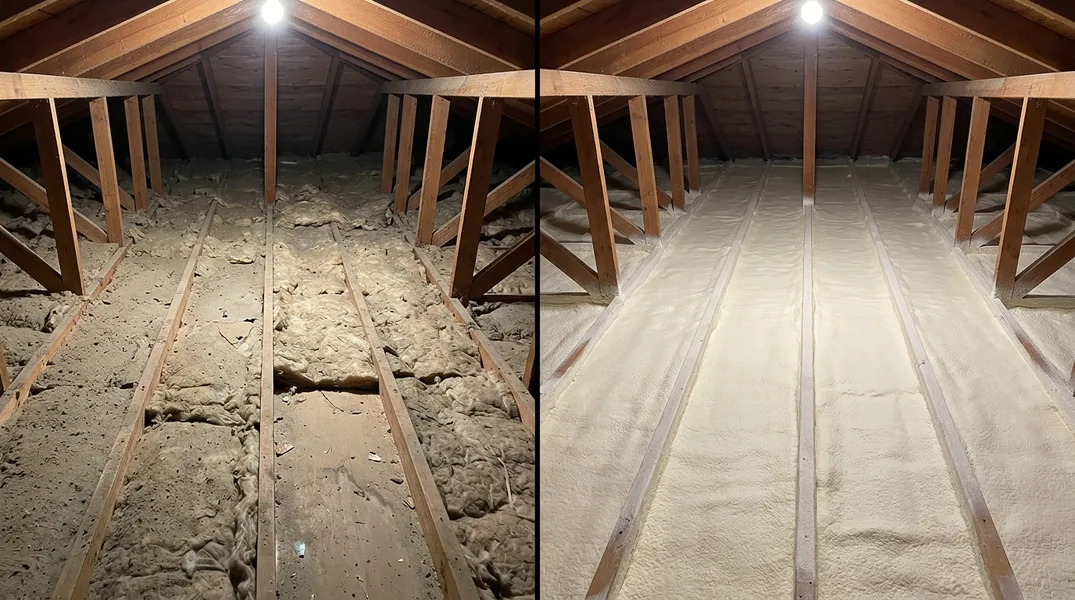
Understanding Open Cell vs. Closed Cell Spray Foam
One of the most important conversations you'll have with your insulation contractor is about the type of spray foam that will work best for your home. Open Cell Spray Foam Insulation and Closed Cell Spray Foam Insulation are fundamentally different products, and understanding the distinction will help you make an informed decision about your attic project.
Open cell spray foam has a lower density and is more flexible once cured. It's typically less expensive and performs well in most climates, including the warm Texas environment. However, it's more permeable to moisture, which means it allows water vapor to pass through. Closed cell spray foam, on the other hand, is denser and creates a more rigid barrier. It provides superior moisture resistance and higher R-value per inch, making it ideal for areas prone to humidity or where maximum insulation performance is needed. Before your contractor begins work, ask them to explain which type suits your specific situation and why they recommend it for your attic or walls.
Ask About R-Value and Energy Performance
The R-value of insulation measures its thermal resistance, or how well it prevents heat from flowing through it. This is one of the most critical questions to ask your contractor. The closed cell spray foam R value typically ranges from 6 to 7 per inch, while open cell foam offers approximately 3.6 to 3.8 per inch. In San Antonio, where summers are hot and air conditioning costs can be substantial, understanding the R-value your contractor is proposing will directly impact your energy bills and comfort year-round.
Before work begins, request a detailed breakdown of the Attic Spray Foam Insulation R-value they plan to install and how it compares to your current insulation (if any). Ask them to explain what R-value is recommended for your specific climate zone and attic configuration. A reputable contractor will provide you with written specifications and explain how the thickness of the foam application affects the total R-value. This conversation ensures you're getting the level of thermal protection your home needs to stay comfortable and energy-efficient.
Discuss Licensing, Insurance, and Certifications
Before signing any contract, verify that your contractor holds all necessary licenses required to operate in San Antonio and the surrounding areas. Ask to see their business license, contractor license, and any certifications from spray foam manufacturers or professional organizations. A licensed contractor demonstrates that they've met industry standards and are accountable to regulatory bodies. This protects you in case something goes wrong during or after the installation.
Insurance is equally important. Request proof of general liability insurance and workers' compensation coverage. If a worker is injured on your property or your home sustains damage during installation, the contractor's insurance should cover it. Never hire an uninsured contractor, as you could be held liable for accidents or injuries. Don't hesitate to ask for references from recent customers in your area, and follow up by calling a few of them. A trustworthy contractor will be transparent about their credentials and happy to provide evidence of their qualifications.
Clarify the Installation Process and Timeline
Understanding how the installation will unfold helps you prepare your home and set realistic expectations. Ask your contractor to walk you through the entire process, from preparation to cleanup. Will they need to remove existing insulation? How will they protect your belongings and other areas of your home? What safety precautions will they take? For Attic Spray Foam Insulation projects, ask whether they'll need to ventilate your attic during application and how long the foam takes to cure before your attic is usable again.
Timeline is another crucial detail. Ask how long the job will take, whether it will be completed in one day or span multiple visits, and what the weather conditions need to be for proper application. Spray foam installation requires specific temperature and humidity conditions to cure correctly, so delays due to weather are possible. Understanding these logistics upfront prevents frustration and allows you to plan accordingly. Also ask about noise levels and whether you'll need to vacate your home during the application process.
Attic Spray Foam Insulation Cost in San Antonio: What to Budget
Cost is naturally a major consideration for any home improvement project. Before your contractor begins work, request a detailed written estimate that breaks down all expenses. Ask what factors influence the pricing, such as the square footage of your attic, the type of foam being used, the desired R-value, and whether any prep work or removal of old insulation is needed. A transparent contractor will explain why their estimate is what it is and how it compares to industry standards in your region.
Don't automatically choose the lowest bid. Instead, compare estimates from multiple contractors and evaluate what's included in each quote. Some contractors may offer additional services like air sealing or ventilation improvements that justify a higher price. Ask if there are any financing options available or rebates you might qualify for through your utility company. Many Texas homeowners can take advantage of energy efficiency incentives. Request a written contract that specifies all costs before any work begins, so there are no surprises when the bill comes due. If you're ready to move forward, reach out to San Antonio Spray Foam Insulation at (830) 429-5826 or request a free estimate to get a detailed breakdown for your specific project.
Ask About Ventilation, Moisture, and Long-Term Maintenance
Spray foam insulation changes how air moves through your attic, so it's important to discuss ventilation with your contractor before they begin. Ask whether your attic will still need soffit vents or ridge vents after the foam is installed. In some cases, spray foam applied directly to the roof deck can eliminate the need for traditional ventilation, but this depends on local building codes and your specific attic design. Your contractor should be familiar with Alamo Heights, Castle Hills, Leon Valley, and local building requirements to ensure your installation is compliant.
Moisture management is particularly relevant in Texas, where humidity can be high. Ask your contractor how the foam type you're choosing will handle moisture and whether any vapor barriers or additional protective measures are needed. Finally, inquire about long-term maintenance and durability. How long will the foam last? Is it UV-resistant if exposed? What warranty does the contractor offer? Understanding these details ensures your investment in Wall & Injection Foam Insulation or attic foam will provide reliable performance for years to come. A professional contractor will be able to answer all these questions confidently and provide documentation to back up their claims.
Looking for a professional spray foam insulation contractor in San Antonio? San Antonio Spray Foam Insulation responds fast for all your spray foam insulation needs.
Get a Free Quote