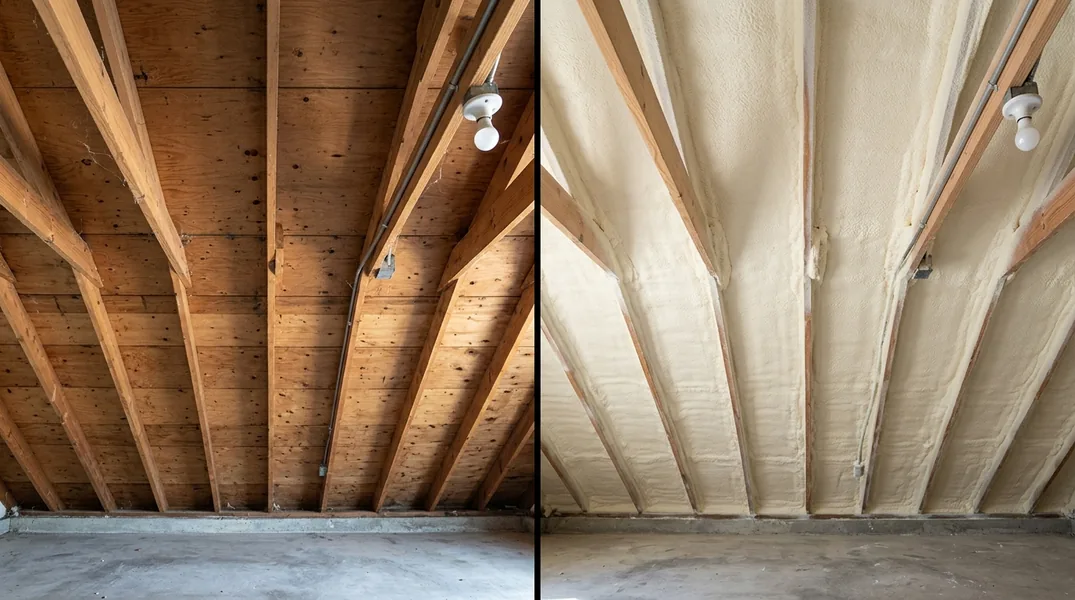
Understanding Spray Foam Types: Open Cell vs Closed Cell
Attic spray foam insulation comes in two primary formulations, and choosing between them is one of the most important decisions you'll make for your home's energy efficiency. Open cell and closed cell spray foam are fundamentally different products that perform differently in various climates and conditions. Understanding these differences is essential before investing in insulation for your San Antonio home.
Open cell spray foam expands significantly after application, creating a lighter, more flexible foam with a lower density. The cells within the foam remain open, which means air and moisture can pass through them. This characteristic makes open cell foam more affordable and easier to work with during installation. Closed cell spray foam, by contrast, has cells that are completely sealed, creating a denser, more rigid material that provides superior moisture resistance and structural support. The fundamental difference in cell structure directly impacts how each foam performs in your attic environment.
Open Cell Spray Foam: Benefits and Limitations for San Antonio Attics
Open Cell Spray Foam Insulation offers several compelling advantages for homeowners in the San Antonio area. The most obvious benefit is cost effectiveness. Open cell foam typically costs less per board foot than closed cell alternatives, making it an attractive option for budget-conscious homeowners. Additionally, open cell foam is an excellent sound dampener, which can help reduce noise from outside and between rooms. For homeowners looking to improve both insulation and acoustics without breaking the bank, open cell foam presents a solid middle-ground solution.
However, open cell foam has notable limitations that matter in Texas. Because the cells remain open, moisture can penetrate the foam, which can be problematic in humid climates or areas prone to water intrusion. San Antonio experiences significant heat and occasional moisture issues, so this characteristic requires careful consideration. Open cell foam also provides a lower R-value per inch compared to closed cell alternatives, meaning you'll need greater thickness to achieve the same insulation performance. For attic applications where space might be limited or where moisture control is critical, these drawbacks can outweigh the cost savings.
Closed Cell Spray Foam: Superior Protection for Demanding Attics
Closed Cell Spray Foam Insulation represents the premium option for attic insulation, and for good reason. The sealed cell structure creates an impermeable barrier that resists moisture penetration, making it ideal for protecting your home against humidity, leaks, and condensation. This moisture resistance is particularly valuable in attic spaces where temperature fluctuations and potential water intrusion are ongoing concerns. Closed cell foam also delivers a higher R-value per inch, typically around 6.0 to 7.0 compared to open cell's 3.5 to 3.6, meaning you achieve superior insulation performance with less material thickness.
Beyond insulation value, closed cell foam provides structural reinforcement to your attic. The rigid foam actually strengthens the roof assembly, which can be beneficial in areas prone to severe weather. For homeowners in San Antonio seeking maximum energy efficiency and long-term protection against moisture-related damage, closed cell foam delivers measurable benefits. The higher pricing reflects the superior performance and durability. Many homeowners find that the energy savings and reduced risk of moisture damage justify the initial investment over the life of the insulation.
Sealed Attic Insulation: Why Ventilation Matters Less with Spray Foam
Traditional attic insulation requires proper ventilation to manage moisture and temperature, but attic spray foam insulation changes this equation entirely. When you apply spray foam to your attic, you're creating a sealed attic insulation system that acts as a complete air barrier. This sealed approach eliminates air leaks that traditional fiberglass or cellulose insulation cannot address, leading to dramatically improved energy efficiency. A sealed attic means conditioned air stays inside your home rather than escaping through gaps and cracks in the roof assembly.
An unvented attic spray foam application transforms your attic from a passive, vented space into an actively conditioned part of your home's thermal envelope. This approach is particularly effective in San Antonio's hot climate, where keeping heat out of the attic reduces the workload on your air conditioning system. Because spray foam creates an impermeable seal, you don't need traditional soffit and ridge vents. The foam itself manages moisture by either blocking it (closed cell) or allowing controlled drying (open cell with proper installation). This sealed strategy has become increasingly popular among energy-conscious homeowners and is recommended by many modern building science professionals.
Climate Considerations: Which Foam Works Best in San Antonio?
San Antonio's climate presents unique challenges that should influence your spray foam choice. The region experiences hot, humid summers with temperatures regularly exceeding 95 degrees, combined with occasional moisture from rainfall and high humidity levels. These conditions favor closed cell foam's superior moisture resistance and higher R-value performance. When your attic is exposed to intense solar heat and potential moisture intrusion, the premium protection offered by closed cell foam becomes a practical investment rather than a luxury upgrade.
That said, open cell foam can still work in San Antonio if properly installed with attention to moisture management. Many contractors recommend open cell foam for attics where ventilation is maintained or where the home's design allows for proper drying potential. The key is understanding your specific home's characteristics and local weather patterns. Professional installers in San Antonio understand these nuances and can recommend the best solution for your particular situation. If you're uncertain which option suits your home, reaching out for a free estimate from experienced local contractors can provide clarity based on your attic's specific conditions.
Attic Spray Foam Insulation Cost in San Antonio: What to Budget
Understanding the financial investment required for spray foam insulation helps you make an informed decision. Open cell spray foam typically costs between $0.50 and $1.00 per board foot, making it the more economical choice upfront. Closed cell foam generally ranges from $1.00 to $1.50 per board foot or higher, reflecting its superior performance characteristics. For an average San Antonio attic requiring 1,000 to 2,000 board feet of coverage, you're looking at anywhere from $500 to $3,000 or more depending on foam type, attic size, and installation complexity.
However, focusing solely on initial pricing misses the bigger financial picture. Closed cell foam's superior R-value means you may achieve your desired insulation performance with less material, potentially offsetting some of the per-foot cost difference. More importantly, the energy savings from improved insulation efficiency typically pay for the installation within 5 to 10 years through reduced cooling costs. Closed cell foam's moisture resistance also prevents costly water damage and mold remediation, adding significant long-term value. To understand exactly what your specific project will cost and what savings you can expect, San Antonio Spray Foam Insulation offers personalized assessments. Call (830) 429-5826 to discuss your project details and receive transparent pricing information.
Attic Spray Foam Insulation Near Me: When to Call a Professional
Deciding between open cell and closed cell spray foam is important, but proper installation is equally critical to achieving the performance benefits you're paying for. This is not a DIY project. Professional spray foam installation requires specialized equipment, training, and safety protocols that homeowners simply cannot replicate. Improper application can result in incomplete coverage, inadequate expansion, off-gassing issues, and failure to achieve the intended R-value and air-sealing benefits.
San Antonio Spray Foam Insulation brings years of local experience and expertise to every project. Our team understands the specific challenges San Antonio homes face, from intense summer heat to occasional moisture issues. We can evaluate your attic's current condition, assess your insulation needs, and recommend whether open cell or closed cell foam is best for your situation. We handle everything from pre-installation preparation to post-installation quality verification. If you're ready to upgrade your attic insulation and want professional guidance on which foam type fits your home best, contact us today at (830) 429-5826 or request a free estimate online. Let our local experts help you make the right choice for your San Antonio home.
Looking for a professional spray foam insulation contractor in San Antonio? San Antonio Spray Foam Insulation responds fast for all your spray foam insulation needs.
Get a Free Quote