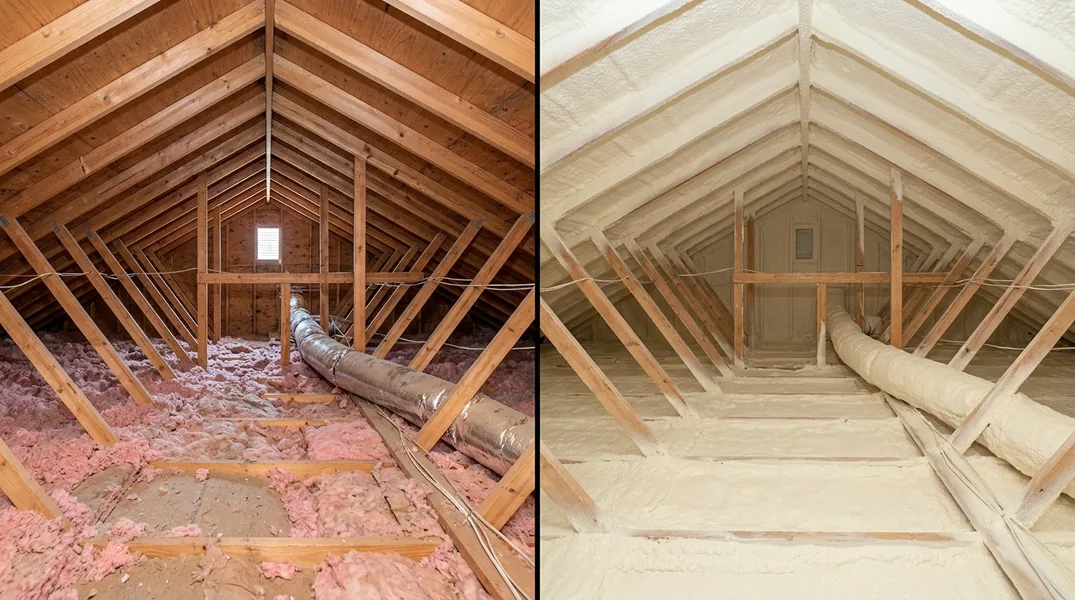
Understanding the Difference: Air Sealing vs. Full Foam Installation
When homeowners in San Antonio think about improving their attic insulation, they often face a fundamental question: should they seal air leaks, install full insulation, or do both? These are two distinct approaches to energy efficiency, and understanding the difference is crucial to making the right choice for your home.
Air sealing focuses on closing gaps, cracks, and penetrations where conditioned air escapes and outside air infiltrates. Common culprits include gaps around electrical outlets, HVAC ducts, plumbing penetrations, and the attic hatch. This approach is often the most cost-effective first step because air leakage accounts for a significant portion of energy loss in many homes. However, air sealing alone does not add insulation value. It simply prevents air movement through existing gaps.
Attic Spray Foam Insulation, on the other hand, provides both air sealing and thermal resistance in one application. When spray foam is applied to attic surfaces, it expands to fill cavities, seal gaps, and create a continuous thermal barrier. This dual benefit makes it a comprehensive solution that addresses both air infiltration and insulation performance simultaneously.
Spray Foam Insulation R-Value Per Inch: What You Need to Know
One of the most important metrics in insulation performance is the R-value, which measures thermal resistance. Understanding how R-value is calculated helps you compare different insulation options fairly. Closed Cell Spray Foam Insulation typically delivers approximately 6.0 to 6.5 R-value per inch, making it one of the most efficient insulation materials available. This high R-value per inch means you need less thickness to achieve your target insulation level compared to fiberglass batts or blown cellulose.
Open Cell Spray Foam Insulation provides roughly 3.5 to 3.6 R-value per inch. While this is lower than closed cell, it is still competitive with traditional insulation methods and offers the advantage of being more cost-effective. Open cell foam is also more flexible, making it easier to work with in certain applications. For homeowners deciding how thick spray foam should be, the choice between closed and open cell significantly impacts the final thickness needed to meet your R-value requirements.
The practical implication is straightforward: if you want to achieve an R-value of 30 in your attic using closed cell foam, you would need approximately 5 inches. With open cell foam, you would need roughly 8 to 9 inches to reach the same thermal resistance. Your specific climate zone and energy goals will determine which option makes the most sense for your investment.
R-Value Requirements by State and Local San Antonio Standards
Texas has established building code standards for attic insulation, and San Antonio homeowners should be aware of the current requirements. The International Energy Conservation Code (IECC), which Texas has adopted and adapted, recommends minimum attic insulation levels based on climate zone. San Antonio falls within a climate zone that typically requires R-30 to R-38 for attic insulation, depending on whether you are building new or retrofitting an existing home.
For new construction in the San Antonio area, R-38 is the standard requirement. For existing homes undergoing renovation or insulation upgrades, R-30 is often the baseline, though many energy-conscious homeowners choose to exceed this minimum. The reasoning is simple: better insulation reduces heating and cooling costs year-round. In San Antonio's hot summers and mild winters, proper attic insulation keeps cool air from escaping and prevents heat from radiating down into your living spaces.
It is important to note that building codes represent minimum standards, not optimal performance levels. Many homeowners find that upgrading beyond the code minimum delivers faster payback through reduced utility bills. When you work with San Antonio Spray Foam Insulation on your project, our team can help you understand local requirements and recommend the best approach for your specific home and budget.
How Thick Should Spray Foam Be: Determining the Right Depth for Your Attic
The thickness of spray foam required depends on three main factors: the R-value you want to achieve, the type of foam you select, and your climate zone. As mentioned earlier, closed cell foam delivers higher R-value per inch, so it requires less thickness. However, thickness also depends on whether you are sealing rim joists, roof decks, or attic floors, as each application may have different requirements.
For attic floor applications in San Antonio, most homeowners aim for R-30 to R-38. If you choose closed cell foam, this translates to 5 to 6.5 inches of material. If you prefer open cell foam, plan for 8 to 11 inches. Many contractors recommend applying foam in two passes rather than one thick application, as this ensures better coverage and reduces the risk of voids. The foam expands as it cures, so proper application technique is essential to achieving consistent thickness and performance.
Another consideration is the existing insulation in your attic. If you already have fiberglass batts or blown-in insulation, you can apply spray foam over or around it, or remove the old material first. Removing old insulation adds cost but ensures a cleaner installation and allows you to inspect the attic structure for any moisture or pest issues. Your contractor should assess your specific situation and recommend the most effective approach. If you are unsure about the right thickness for your home, reach out to San Antonio Spray Foam Insulation for a free estimate.
Insulation Tax Credits and Rebates: Making Your Investment More Affordable
One of the most appealing aspects of upgrading your home's insulation is the potential for financial incentives. The federal government offers an insulation tax credit for homeowners who improve their home's energy efficiency. Depending on the year and specific improvements, you may qualify for a credit of up to 30 percent of the cost of insulation materials and installation, with limits that apply annually. This is a significant benefit that can reduce the net cost of your spray foam project substantially.
Beyond federal tax credits, many local utilities and energy programs offer rebates for insulation upgrades. In Texas, programs like those offered by CPS Energy in San Antonio may provide incentives for improving attic insulation. These rebates can range from a few hundred to several thousand dollars, depending on the scope of your project and the current program offerings. It is worth contacting your local utility to ask about available incentives before you begin your project.
When evaluating the true cost of spray foam insulation, always factor in these potential credits and rebates. What appears to be a significant upfront investment often becomes much more affordable once you account for tax benefits and utility incentives. Additionally, the energy savings you realize each month through lower heating and cooling bills represent an ongoing return on your investment. Many homeowners find that their insulation upgrade pays for itself within five to ten years through utility savings alone, and the benefits continue for decades.
Attic Spray Foam Insulation Near Me: When to Call a Professional in San Antonio
While some homeowners attempt DIY insulation projects, attic spray foam installation is best left to trained professionals. The application requires specialized equipment, proper safety precautions, and expertise in handling the chemicals involved. Improper installation can result in inadequate coverage, off-gassing issues, or damage to your attic structure. A professional contractor has the knowledge to assess your attic's condition, recommend the right foam type and thickness, and execute the installation correctly.
San Antonio Spray Foam Insulation brings years of local experience to every project. Our team understands the specific climate challenges of the San Antonio area and knows how to design insulation solutions that work effectively in our hot, humid summers. We handle everything from initial inspection and air sealing recommendations to full foam installation, ensuring your attic is properly sealed and insulated. Call us today at (830) 429-5826 or visit our website to schedule your free estimate.
When you choose a professional contractor, you also gain access to valuable guidance on maintenance, warranty information, and long-term energy efficiency strategies. We can help you navigate tax credits, rebate programs, and financing options to make your project as affordable as possible. Whether you need simple air sealing or a comprehensive attic foam installation, our team is ready to deliver the quality and service your home deserves.
Looking for a professional spray foam insulation contractor in San Antonio? San Antonio Spray Foam Insulation responds fast for all your spray foam insulation needs.
Get a Free Quote